
Ziggurat of Cheghazanbil-Sush
Cheghazanbil Ziggurat of Shush is a place of worship that was built during the Elamite period around 1250 BC. Cheghazanbil Shush Ziggurat is one of the three Iranian works that was registered in the UNESCO world list as the first national work of Iran in 1358, together with Persepolis and Naqsh Jahan Square in Isfahan.
This place is located in Khuzestan province, 30 km southeast of Shush city.
This cultural work located in Shush city (Khuzestan province) is the first work that was registered in the UNESCO World Heritage List in Iran (1979). This place of worship was very valuable in the history of Elam (Elam) and is still very important as one of the early examples of pyramid architecture. The different construction of this ziggurat compared to other Babylonian and Assyrian ziggurats and its brick inscriptions make this historical religious building special, so that many architects and archaeologists are fascinated by it. After the discovery and at the same time that orientalists and archaeologists were working on it, this building was registered in the UNESCO World Heritage List of Iran. It is worth mentioning that this unique work is based on criteria 3 and 4 of UNESCO World Heritage (respectively: unique or at least exceptional evidence of a cultural tradition or a living or lost civilization; an outstanding example in architecture or technology that is an important stage of human history. show) has been registered.

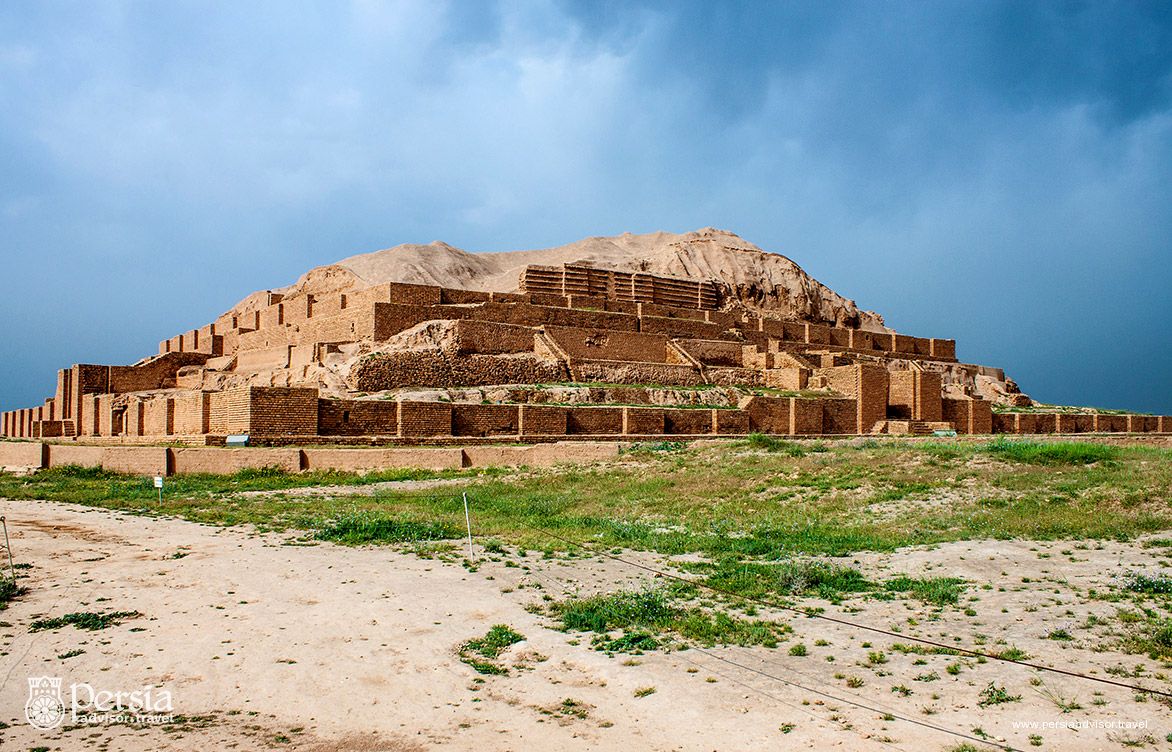


Chughazanbil
Outstanding Global Value of Concise Synthesis
Chaghazenbil (Dur Untash or Untash city in Elamite language) was founded in ancient Elam (modern Khuzestan province in southwestern Iran) by the Elamite king Untash-Napirisha (1240-1275 BC) as the religious center of Elam. The main element of this complex is a huge ziggurat dedicated to the Elamite gods Inshushinak and Napirisha. It is the largest ziggurat outside of Mesopotamia and the best example of this type of stepped pyramid construction. The ancient site of Chaghazanbil is an exceptional expression of the culture, beliefs and ritual traditions of one of the oldest indigenous peoples of Iran. Our knowledge of the architectural progress of the middle Elam period (1400-1100 BC) is from the ruins of Chaghazanbil and the capital city of Susa, 38 km northwest of the temple.
The ancient site of Chaghazanbil covers a wide and dry plateau overlooking the rich valley of Ab Diz River and its forests. The “holy city” for the king’s residence was never completed and only a few priests lived there until it was destroyed by the Assyrian king Ashurbanipal around 640 BC. The complex was protected by three concentric enclosure walls: an outer wall with a perimeter of about 4 km that contained a large complex of residences and the royal quarter where three monumental palaces have been discovered (one as a tomb It is considered to cover the remains of the underground baked brick structures containing the burials of the royal family); The second wall that protects the temples (Temenus). and the innermost wall that encloses the focal point of the group, the ziggurat.
The ziggurat was originally 105.2 meters on each side and about 53 meters high, on five levels and crowned with a temple. Mud brick was the basic material of the whole complex. The ziggurat was covered with fired bricks, some of which have cuneiform letters that represent the names of the gods in Elamite and Akkadian languages. Although the ziggurat is now only 24.75 meters high, less than half of its original estimated height, its state of preservation is unparalleled. The studies of the ziggurat and the rest of the archaeological site of Chaghazanbil, including temples, residences, palaces and other reservoirs, have made an important contribution to our knowledge about the architecture of this period of the Elamites, whose ancient culture has continued until now. The emerging Achaemenid Empire (the first Iranian one) that changed the face of the civilized world at that time.
Criterion (iii): The ruins of Shush and Chaghazanbil are the only evidence of the architectural progress of the middle Elam period (1400-1100 BC).
Criterion (IV): The ziggurat at Chaghazanbil remains to this day the best-preserved monument of its kind and the largest outside Mesopotamia.
completeness
Within the boundaries of the property are all the elements and components necessary to express the outstanding global value of the property, including concentric walls, the royal quarter, temples, various dependencies and ziggurats. Almost none of the various architectural elements and spaces have been removed or seriously damaged. The integrity of the landscape and lifestyle of the indigenous communities is largely protected due to their remoteness from urban areas.
Identified threats to the integrity of the property include heavy rains that can have a damaging effect on exposed adobe and mud structures. Changing the course of the Ab Diz River, which threatens the outer wall. Sugarcane cultivation and processing has changed the traditional land use and increased air and water pollution. and deforestation of river valleys. In 2002, visitors were prohibited from climbing the ziggurat, and a lighting system was installed and guards were stationed at the site to protect against illegal excavations.
Validity
The historical monuments of the ancient site of Chaghazanbil are authentic in terms of shape and design, materials and essence, and location and place. Several conservation measures have been taken since the initial excavations of the site between 1946 and 1962, but they have generally not disturbed its historical authenticity.
Conservation and management requirements
Chaghazanbil was registered in the list of national works of Iran under number 1393. 895 on 26 January 1970. Relevant national laws and regulations on the property include the National Heritage Protection Act (1930, updated 1998) and the 1980 Prevention of Clandestine Excavations and Illegal Excavations Act. The registered World Heritage property that belongs to the Iranian government and its buffer zone is managed by the Iran Cultural Heritage, Handicrafts and Tourism Organization (administered and financed by the Iranian government). Management program
It has been implemented ever since. Planning for tourism management, landscaping and emergency evacuation of the property has been done and its implementation is underway in 2013. A research center has been conducting daily, monthly and annual monitoring of the property since 1377. Financial resources for Chaghazanbil are provided through National budgets
Conservation activities are carried out in a general framework, including the development of scientific research programs. comprehensive protection of property and its natural-historical context; Extending the protection program to the surrounding environment; Focus on public participation and government organizations and agencies; And with special attention to educational and presentation programs (with the aim of developing cultural tourism) based on sustainable development. Objectives include research programs and promotion of conservation management culture. scientific and comprehensive protection of property and surrounding areas; and development of training and preparatory programs.
Maintaining the property’s outstanding global value over time requires establishing a transparent and orderly financing system, employing efficient and sustainable management systems, supporting ongoing conservation and presentation, enjoying public support and revitalizing the property, adopting a “minimum intervention” Is. approach, and respect for the integrity and authenticity of the property and its surroundings. In addition, any outstanding recommendations from past expert missions to the property should be considered.